
With the rise of telehealth and EHR systems, digital literacy is essential for healthcare roles — but how many in the field actually know how to navigate complex tech systems?
- About a third of healthcare workers lack adequate digital skills. While most healthcare providers use electronic health records (EHRs), telehealth platforms, and other digital tools daily, not all healthcare professionals can adequately use these systems — and about 12% can’t navigate them at all.
- As telehealth and data-driven care become the norm, healthcare professionals must understand cybersecurity, data analysis, and digital communication — not just basic tech use.
- Pre-hire digital literacy tests can close the gap and improve care. Platforms like eSkill help assess real-world digital competencies before hiring, allowing healthcare organizations to identify training needs and ensure safe, effective use of technology in patient care.
Research shows that about one-third of U.S. health and social care workers lack key digital skills, with roughly 12% having no digital skills at all.
To fall in that 12%, those healthcare workers failed at one of the following baseline criteria: prior computer use, willingness to take the computer-based test, or the ability to complete four out of six very basic tasks, like using a mouse or highlighting text on screen.
While the research was conducted in 2014, the study still paints a frightening reality when nearly every hospital and clinic now uses electronic health records (EHRs), telehealth platforms, and other digital tools in daily practice. Issues like data privacy, inaccurate records, improper billing, and more can surface — putting a company’s entire healthcare workforce, and patients, at risk.
From doctors and nurses to patients and administrators, everyone in the healthcare ecosystem benefits when digital literacy is prioritized. But as digital use in the healthcare field grows and grows, some may be getting left behind.
Healthcare providers need to make sure new hires and current personnel have the digital skills required to do the job.
What is digital literacy in the medical field?
Digital literacy in the medical field refers to the ability of healthcare professionals, patients, and healthcare systems to effectively use digital tools, platforms, and data to improve health outcomes, streamline workflows, and enhance patient care.
It goes beyond basic computer skills to include critical thinking, ethical awareness, and information evaluation in a digital context.
What’s driving the urgency behind digital skills in the healthcare field?
The rise of telemedicine following the pandemic is one of the things driving the urgency behind digital skills in the medical field, but it’s far from the only one.
AI and machine learning, for another, are reshaping diagnostics and decision-making. A 2019 study found that AI diagnostic tools can match or outperform humans in interpreting medical imaging.
Another trend is data interoperability, where systems are being built to share patient data securely across platforms and providers. This is supported by legislation like the 21st Century Cures Act, which aims to improve interoperability of EHRs and eliminate information blocking.
Personalized medicine is also gaining traction, using data from genomics, wearables, and lifestyle factors to tailor treatments.
It’s essential that both clinicians and patients are fluent in data interpretation and digital communication, especially as tech advancement in healthcare continues to accelerate.
Why is digital literacy essential for healthcare professionals?
Healthcare providers now interact with technology at nearly every stage of care delivery. Clinicians are expected to navigate electronic health record (EHR) systems efficiently, often across multiple platforms. In the US, 88.2% of office-based physicians were using EHRs as of 2021, according to the CDC’s National Center for Health Statistics.
Digital competence also includes understanding the fundamentals of cybersecurity and complying with privacy regulations like HIPAA, especially in light of rising cyberattacks in the healthcare sector.
While digital tools can improve efficiency and care quality, not all healthcare workers are equally prepared to use them.
Digital skill levels across healthcare roles
While virtually all U.S. hospitals have adopted EHRs and other health IT, the workforce’s digital skill levels range from novice to expert.
Only about 29% of health workers have “advanced” digital skills, and 38% have basic proficiency, leaving a full one-third with inadequate skills.
These gaps cut across roles — nurses, physicians, allied health staff, and administrators.
Nurses and frontline clinicians
Nurses often use multiple digital systems (for documentation, medication administration, patient education tools, and more) and tend to rate their everyday tech literacy as fairly high.
In one hospital survey, 70–80% of staff (mostly nurses) reported confidence in using common technologies. However, this same survey found about 20% of respondents admitted to feeling anxiety with healthcare information systems, revealing a notable minority still uncomfortable with digital tools.
Nurses typically enter the workforce with at least basic computer skills, but many did not receive formal training in specialized health IT during school. Many nurses (and doctors) end up teaching themselves or seeking outside training – nearly one-third in a study paid out-of-pocket for additional digital skills development when it wasn’t provided at work.
Physicians
Younger doctors who are digital natives tend to adapt quickly to new health IT, whereas senior physicians who learned medicine in the pre-digital era often face a steeper learning curve.
Many older doctors did not use EHRs in medical school or residency, since those tools weren’t around quite yet. As a result, they may have excellent clinical judgment but less confidence with tasks like navigating complex EHR interfaces or data analytics. (Some veteran physicians have even begun pairing with junior colleagues in “reverse mentoring” arrangements to learn tech skills.) Despite these challenges, most physicians have attained at least basic EHR competence out of necessity.
One study showed near-universal EHR use among physicians, but also highlighted serious usability issues.
Other roles (technicians, pharmacists, support staff)
Healthcare is a team effort, and digital literacy extends to technicians, therapists, pharmacists, and beyond. These professionals often use specialized software (for example, pharmacy information systems, diagnostic equipment interfaces) and need digital know-how as well.
Among health technicians and office staff, there’s a portion with only rudimentary computer skills, like with physicians and nurses. Front-office personnel might struggle with new telehealth scheduling software, or lab techs might be unfamiliar with data security practices, depending on their background.
The good news is that newer generations of health professionals are entering the workforce with stronger baseline digital literacy. The challenge is making sure your new hires possess the digital skills required to do their job.
Talk to sales to learn more about how the eSkill platform can help you hire.
Common barriers to digital literacy in healthcare
If digital skills are so critical, why do gaps persist? Several common barriers and challenges hinder the development of digital literacy among healthcare professionals:
Generational and age factors
There is a clear generational divide in comfort with technology. Older nurses and doctors did not train with modern IT and often struggle more with digital services compared to their younger colleagues. In contrast, younger clinicians (millennials and Gen Z) are generally more fluent in digital tools. This gap can create tension and inconsistencies in care if it’s not addressed, however.
Lack of training and education
Many healthcare professionals report that they “learned on the job” when it comes to EHRs, data systems, or device usage.
Until recently, medical and nursing curricula included minimal content on digital tools. Likewise, employers have not always filled the gap – over 80% of healthcare professionals have not received adequate training in eHealth tools like EHRs or mobile health apps, according to a committee finding.
Nurses in particular are likely to receive less on-the-job IT training than physicians, despite being heavy users of clinical tech. The result is a workforce that might know how to perform basic computer tasks (email, data entry) but lacks a deeper understanding of system features, best practices for digital documentation, and know-how like cybersecurity hygiene.
Usability and system design issues
Even a highly skilled clinician can be stymied by poorly designed software. Unfortunately, many healthcare IT systems have notorious usability problems. Electronic health records in particular are often cited as frustrating or unintuitive.
Complex menus, cluttered interfaces, and non-intuitive workflows mean that clinicians must invest extra effort to use these tools effectively. When systems aren’t user-friendly, it erodes users’ digital confidence.
Some clinicians develop workarounds or avoid certain features altogether, undermining the potential benefits of the technology. Worse, bad design can cause errors (e.g. look-alike menu options leading to wrong selections) and contribute to burnout.
Time pressures and workload
Healthcare is a fast-paced environment, and learning new digital skills competes with many other demands. Clinicians often cite lack of time as a key obstacle – there’s simply no spare moment during a 12-hour hospital shift to explore advanced functions of an EHR or to complete optional e-learning modules.
This can create a vicious cycle: overworked staff skip training, then struggle with the technology, which in turn slows them down and adds to stress. Without dedicated time and support for skill-building, even willing learners have difficulty improving their digital literacy.
The role of healthcare institutions
Healthcare organizations themselves play a central role in promoting digital literacy. This includes not only onboarding and training staff, but also selecting user-friendly digital systems and creating a culture of continuous learning.
Hospitals must evaluate digital tools for usability and clinical relevance — and provide support to ensure staff can adopt them effectively.
That means building in regular training, technical support, and feedback loops.
How pre-hire tests can help assess digital literacy in healthcare candidates
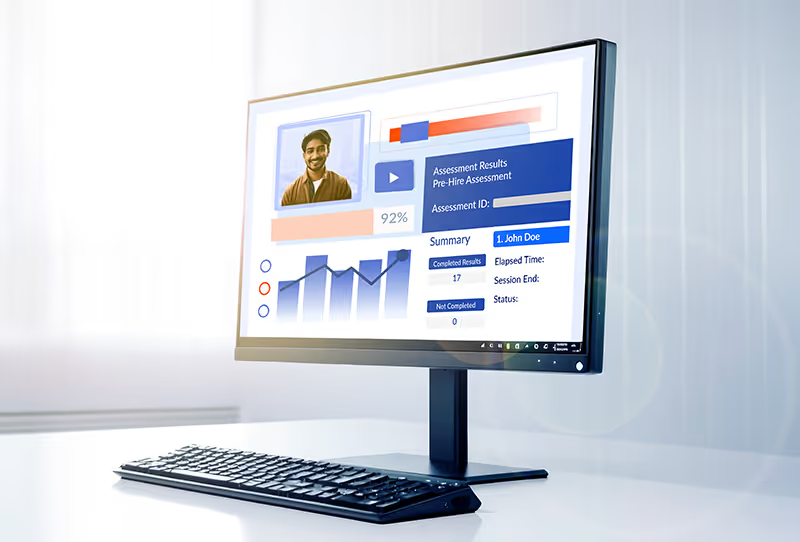
Pre-hire tests can play a crucial role in assessing digital literacy among healthcare candidates, especially as electronic health records (EHRs), telehealth tools, and digital communication platforms become central to patient care.
These assessments help identify a candidate’s baseline competency with common technologies — such as EHR systems, scheduling software, and secure communication tools — and can reveal whether additional training may be needed. Scenario-based tests can simulate real-world tasks, like updating patient records or communicating through a secure portal, allowing employers to evaluate how well candidates apply digital skills in a clinical context.
By screening for these capabilities upfront, healthcare organizations can reduce the risk of costly errors, such as miscommunication or HIPAA violations, while also improving patient safety and reducing onboarding time.
Here at eSkill, we offer both generalized digital literacy tests to highly specific ones — like Epic for general use in healthcare. That way, you can assess digital literacy in healthcare hires and know how to best support them.
For best outcomes, pair general digital literacy tests with other assessments specific to the healthcare role such as medical dosage assessments for medical assistants, medical coding for back office staff, and admin skills for front desk workers.
You can use pre-hire tests to hire medical personnel with the necessary skills required to hit the ground running and contribute to better patient outcomes.