
Welcome to eSkill’s Test of the Month! In these posts, you’ll find information on popular eSkill assessments from our library of more than 600 subject types. This month, we’re spotlighting our Medical Terminology test.
The healthcare field moves at a breakneck pace — by necessity. The U.S. spends more on healthcare than any other country — about $4.9 trillion annually, or nearly 18% of GDP as of 2024. With rates of chronic illnesses going up and an aging population, medical professionals are in high demand.
By 2030, the U.S. is projected to face a significant shortfall not only in nursing but across a broad range of healthcare roles. According to the US Bureau of Labor Statistics, employment in healthcare occupations is expected to grow by 13% from 2021 to 2031, adding about 2 million new jobs — including rising demand for pharmacists, medical records specialists (coders), allied health professionals, and registered nurses.
But with high rates of turnover in the industry and the need for capable replacements, how do you make competent hires that last? And quickly, at that?
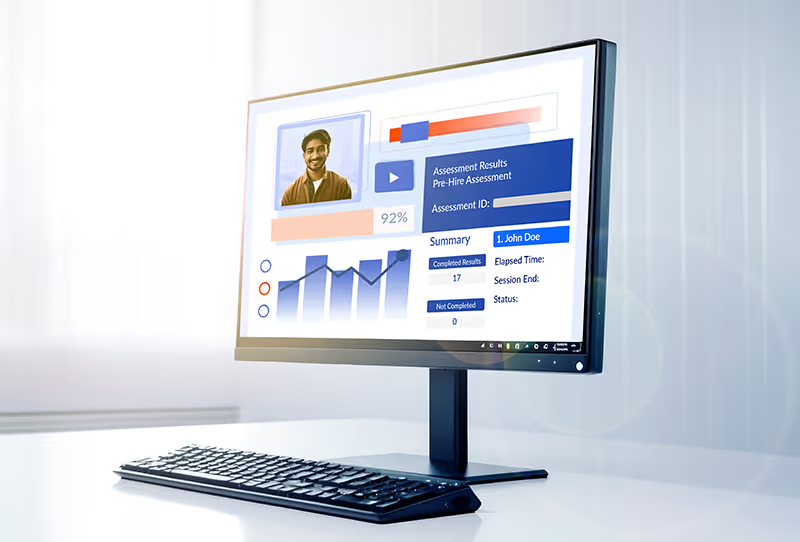
Pre-hire assessments help you test hard skills to find qualified candidates. By testing job knowledge, understanding of software used in a role, and situational judgement with free response questions, you can identify workers with the skills required to do the job at hand.
One of the most valued and perhaps overlooked skillsets is a thorough understanding of medical terminology. Accurate, consistent use of medical vocabulary is essential to patient safety, regulatory compliance, and clear communication across interdisciplinary teams.
Enter the eSkill medical terminology assessment: a customizable evaluation designed to validate that candidates can read, understand, and apply professional medical language confidently — before they step into any clinical role.
Shortages & burnout
Nursing and physician shortages remain critical, especially in rural and underserved areas.
According to the Association of American Medical Colleges, the U.S. could see a shortage of up to 86,000 physicians by 2036.
Burnout is widespread. A 2023 Medscape survey found that 53% of physicians report feeling burned out, especially in emergency medicine, primary care, and OB-GYN.
The demand for allied health professionals (like respiratory therapists and radiologic technologists) is also rising sharply.
Telehealth & AI
Telehealth use surged during the pandemic and remains strong, especially in mental health. While usage has dipped from its 2020 peak, it's still 38 times higher than pre-COVID levels, per McKinsey.
AI and automation are increasingly used in diagnostics — in radiology and pathology, for example — administrative workflows (like billing and scheduling) and even clinical decision-making.
What is medical terminology?
Medical terminology is the standardized language used to precisely describe the human body — plus its functions, conditions, and treatments. It’s necessary for clear and consistent communication in the healthcare field.
Built from Greek and Latin roots, prefixes, and suffixes, medical terminology is highly specialized and specific.
Understanding this language is crucial for anyone working in or studying healthcare — that means everyone from nurses to administrative assistants.
What does the medical terminology test cover?
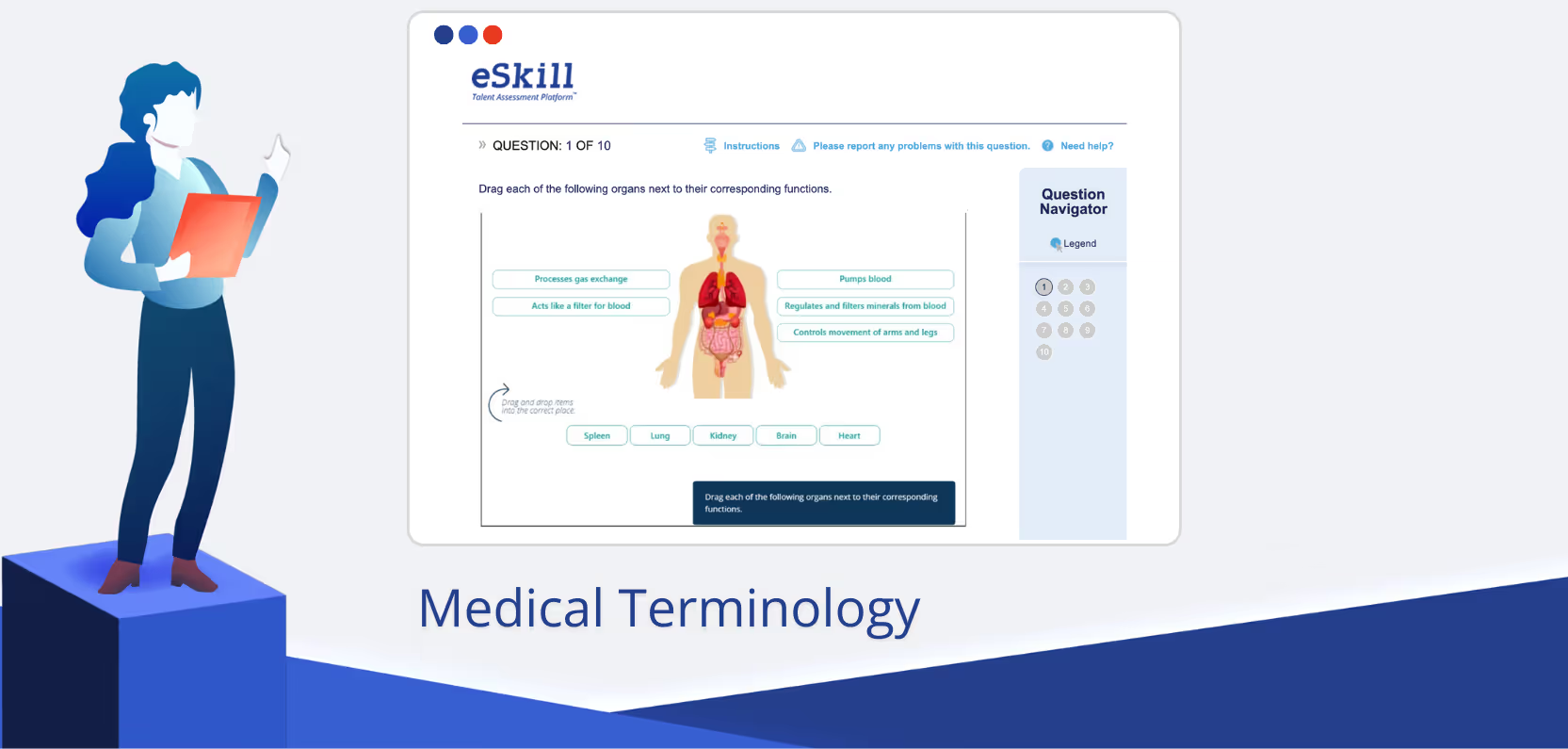
The eSkill medical terminology test offers a dynamic way to assess candidates’ grasp of essential healthcare concepts. Rather than relying solely on textbook definitions, the test includes real-world images, diagrams, and scenario-based questions — like identifying the correct injection site on a diagram of the human body or matching a lab result to a possible diagnosis.
It covers everything from anatomical terms and drug administration to infectious diseases and surgical procedures. Candidates are tested on their understanding of key body systems — such as the cardiovascular, endocrine, and respiratory systems — ensuring they’re familiar with the language used every day in clinical settings.
It’s designed not just to test memory, but to reveal how well someone can apply their medical knowledge in practical, on-the-job situations.
Test format
eSkill’s medical terminology test is primarily delivered in a multiple-choice format, making it easy to administer and evaluate at scale. Many questions are paired with visuals — like anatomical diagrams, clinical photos, or snapshots from real healthcare settings — to mimic the environments candidates may encounter on the job.
Brief overviews or case-based scenarios often accompany the questions, challenging test-takers to apply their knowledge to realistic situations. This format helps employers evaluate whether a candidate can recognize terminology in action, not just in theory.
Ideal industries & jobs
A medical terminology test is highly useful in industries and roles where employees need to accurately understand, interpret, or communicate clinical or healthcare-related information. Here are the ideal industries and jobs where implementing such a test for incoming candidates would be most beneficial.
Hospitals and clinics — medical assistants, nurses (RNs, LPNs), patient care coordinators
Diagnostic laboratories — phlebotomists, radiologic technologists
Rehabilitation centers — physical and occupational therapy aides
Medical billing and auditing, claims processing — medical billing and coding specialists, insurance claims processors
Administrative & support Staff roles — medical receptionists, health information technicians
Sales & customer-facing roles — pharmaceutical sales reps, medical device sales specialists, healthcare customer service agents
Research & compliance roles — clinical research associates, regulatory affairs specialists, quality assurance analysts in pharma
Tech roles in healthcare — EHR implementation specialists, medical software trainers, health data analysts
Complementary questions
You don’t just have to test for medical terminology. With eSkill pre-hire assessments, you can create custom tests that mix and match assessment categories to better measure a candidate. Instead of simply testing medical vocabulary, you can test for complementary skills required for the job. Consider pairing the medical terminology test with additional question types:
- Epic for General Use
- Medical Billing
- Medical Coding
- Infection and Prevention Control
- Medical Dosage Calculations
- Medical Transcription
- Medical Decisions and Counseling
- Medication Safety and Antimicrobial Stewardship
- Nursing Skills
Why use the medical terminology test?
In a healthcare industry facing urgent staffing shortages, every hire counts. A medical terminology test offers a fast, effective way to add rigor to your hiring process, helping you identify candidates who are truly prepared to succeed from day one. By assessing terminology knowledge upfront, you can minimize the risk of miscommunication, reduce medical errors, and improve patient safety.
Bottom line: when you screen for terminology proficiency early, you protect your organization, your staff, and your patients — while making every training dollar go further.
Talk to sales to learn more about how the eSkill platform can help you hire.