
Welcome to eSkill’s Test of the Month! In these posts, you’ll find information on popular eSkill assessments from our library of more than 600 subject types. This month, we’re spotlighting our Customer Service test.
Customer service looks different depending on where you work — whether that’s the drive-thru at Chick-fil-A or on the phone at an automotive call center — but great service always starts with the same core skills.
That’s why eSkill offers customer service tests tailored by industry, including financial services, healthcare, hospitality, and retail. Each specific customer service assessment reflects the real-world scenarios and expectations candidates will face on the job.
For roles that span industries (or teams that want to measure foundational service skills), we also offer a generalized customer service test focused on communication, problem-solving, empathy, and professionalism.
So what is customer service, really?
Customer service is, at its core, the practice of reducing friction for someone who’s trying to get something done.
It’s less about scripts or quote-unquote “delighting customers” and more about understanding the real job the customer is trying to accomplish, like fixing a billing issue or navigating a product interface. Effective customer service identifies the need beneath the request and clears the obstacles standing in the customer’s way.
The best customer service also communicates clearly, respectfully, and confidently so customers feel seen and supported, rather than rushed or dismissed.
Put another way, customer service is the human layer that makes a business dependable and worth returning to.
How do companies assess their own customer service?
Companies typically assess their customer service by combining quick, transactional feedback with broader measures of long-term loyalty. Two of the most common metrics are CSAT (Customer Satisfaction Score) and NPS (Net Promoter Score), which together help organizations understand not just how a single interaction went, but how customers feel about the brand as a whole.
CSAT is usually collected immediately after a customer support interaction. You know the ones — the texts you receive immediately after getting off the phone with the electric company, asking you to complete a short survey asking something like, “How satisfied were you with the support you received? Answer on a scale of 1-5.” Altogether, CSAT is a fast, lightweight way to gauge how well a specific issue was handled.
NPS, on the other hand, is designed to measure broader customer loyalty by asking, “How likely are you to recommend us to a friend or colleague?” Customers respond on a 0–10 scale, and their answers are grouped into promoters, passives, and detractors. While NPS isn’t exclusively a customer service metric, support plays an outsized role in shaping it — especially in moments where customers need help or encounter problems.
Beyond surveys, companies look at operational metrics to evaluate efficiency and consistency. These include first-response time, average resolution time, first-contact resolution, ticket backlog, and escalation rates. When paired with qualitative data — like customer comments, call transcripts, or QA reviews — these metrics help leaders understand how well customer service reps meet their customers’ needs.
So why test customer service skills?
Testing customer service skills helps organizations move beyond the usual interviews and resumes to understand how a candidate will actually perform in real interactions with customers.
Strong customer service isn’t about being nice (even though it’s nice to be nice, and to be treated nicely, isn’t it? Nice.). It requires problem-solving skills, emotional intelligence, being able to communicate clearly under pressure, and being able to exercise sound judgment when policies don’t neatly apply.
Well-designed customer service assessments simulate these moments, allowing employers to predict on-the-job performance more accurately and build teams that protect customer satisfaction, retention, and brand trust from day one.
Ideal Industries & Jobs
Customer service roles exist in nearly every industry, but the expectations, workflows, and pressure points can vary widely depending on the environment.
Financial Services
Banks, credit unions, fintech platforms, and insurance providers rely on customer service teams to handle sensitive information, resolve complex issues, and maintain trust. Accuracy, compliance awareness, and clear communication are critical, as even small mistakes can have significant consequences.
Healthcare
From hospitals and clinics to telehealth and insurance providers, customer service professionals in healthcare often interact with people who are stressed or vulnerable. Empathy, patience, and the ability to navigate complex systems are essential for delivering positive patient and member experiences.
Hospitality
Hotels, travel companies, restaurants, and event services depend heavily on customer service to shape brand perception. These roles require strong interpersonal skills, quick problem-solving, and the ability to de-escalate issues in fast-paced, customer-facing environments.
Retail
In both brick-and-mortar and e-commerce settings, customer service teams handle high volumes of inquiries related to orders, returns, and product questions. Success often hinges on efficiency, product knowledge, and consistency across channels like phone, chat, email, and in-store interactions.
What does the Customer Service test cover?
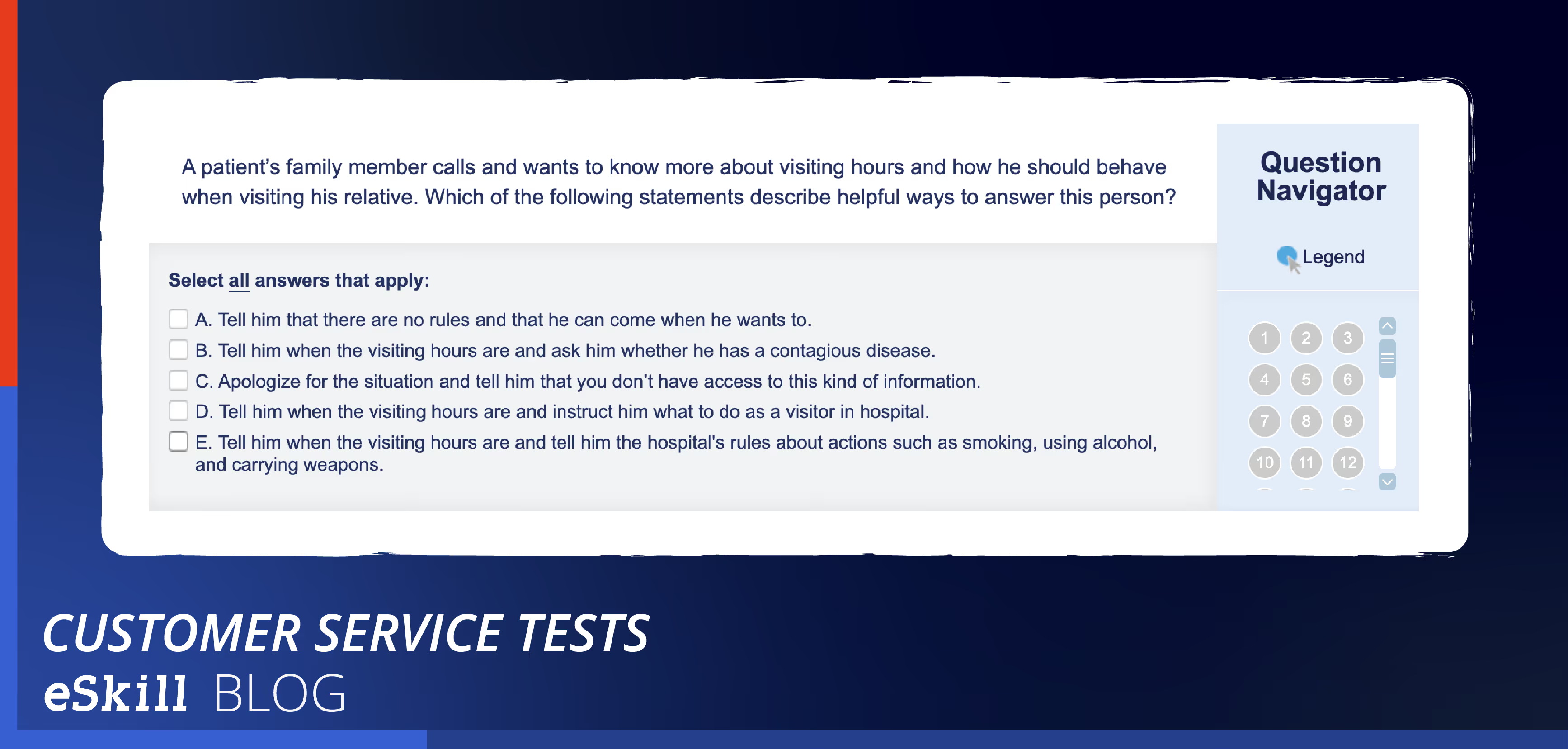
Our Customer Service test covers a number of subjects. It’s sort of like a situational judgment test, presenting test takers with semi-realistic workplace scenarios and asking them to select the best response, assessing problem-solving and interpersonal skills, rather than testing specific job knowledge.
The eSkill Customer Service test exists in different forms for a number of industries, but here’s what we test on our generalized assessment:
- Conflict resolution
- Continuous learning and development
- Customer service and communication
- Digital customer service
- Phone etiquette
- Product knowledge
- Problem identification
- Leadership and decision making
- Integrity and conflict management
- Following instructions
- Customer procedures and policies
- Technical aptitude
- Service knowledge
- Time management
Test format
The eSkill customer service test is primarily a multiple choice, true/false, and check-all-that-apply test. Most questions consist of a scenario presented to the test taker with a selection of possible responses to the situation.
Complementary questions
There are infinite ways to mix-and-match a customer service test based on the industry and specific role you’re hiring for, but here are some starting ideas:
- eSkill Behavioral Profile
- Problem Solving
- Critical Thinking
- One-Way Interview
- Following Instructions
- Time Management
- Decision Making
- Call Center
Why use the Customer Service test?
Our customer service assessments help you evaluate how candidates handle real-world scenarios — such as de-escalating frustrated customers, communicating clearly under pressure, prioritizing tasks, and following company policies — before you make a hiring decision.
With customizable question libraries and scenario-based testing, you can tailor each assessment to match your industry, customer channels (phone, email, chat, in-person), and service standards. This ensures you’re measuring the skills that matter most for your organization, whether you’re hiring for high-volume call centers, frontline retail roles, or specialized support teams.
By testing customer service skills upfront, employers reduce turnover, improve first-contact resolution, and build support teams that protect customer satisfaction and long-term loyalty — without slowing down the hiring process.
Talk to sales to learn more about how the eSkill platform can help you hire.