

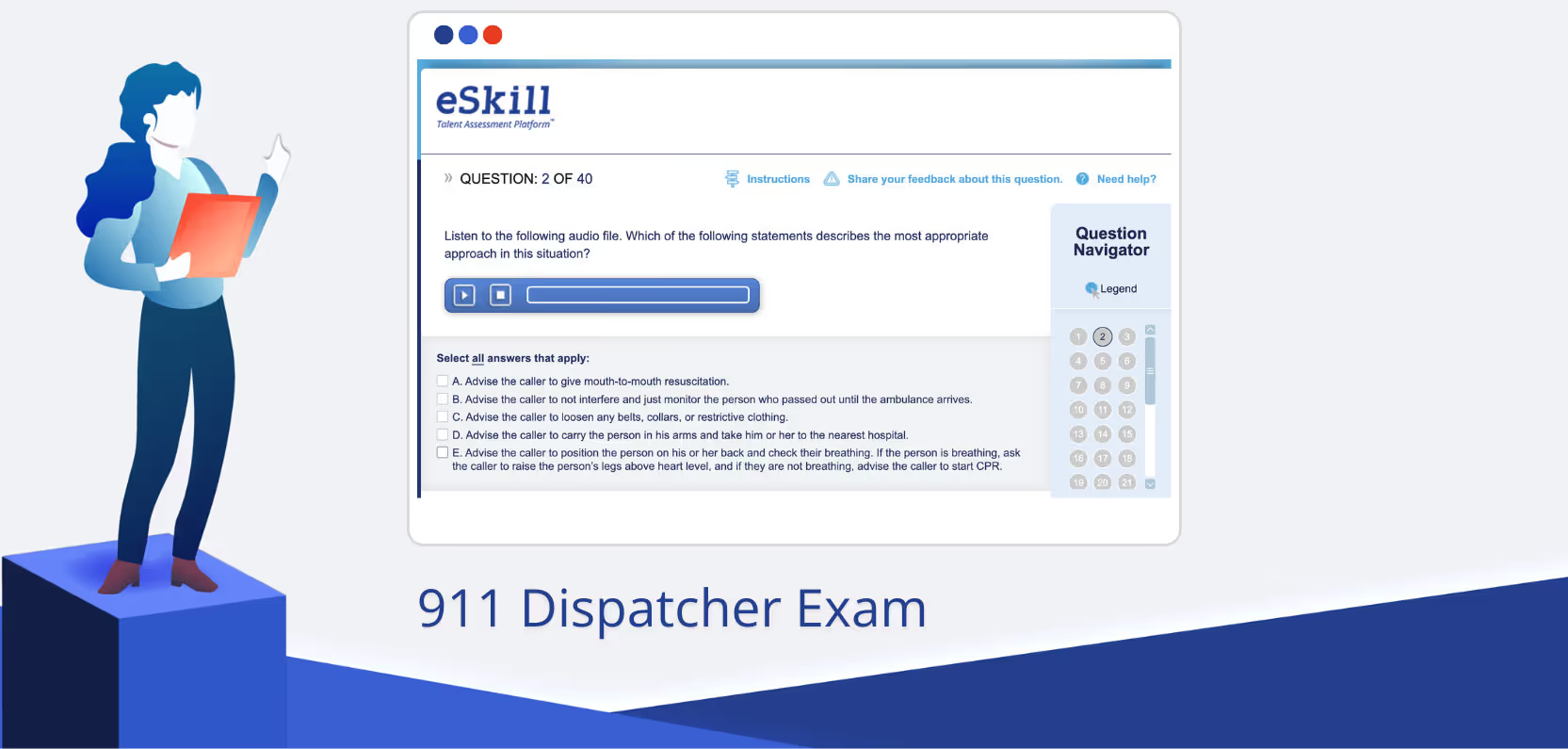
Welcome to eSkill’s Test of the Month! In these posts, you’ll find information on popular eSkill assessments from our library of more than 600 subject types. This month, we’re spotlighting our 911 Dispatcher exam.
About one in five newly-hired 911 dispatchers leave within the first year.
That puts 911 dispatches on par with other high-turnover jobs, like registered nursing roles (which experience 23% first-year turnover).
It doesn’t take being one to see that working as a 911 dispatcher isn’t easy.
The jobs of 911 dispatchers are both high-stakes and high-stress — dispatchers work around-the-clock from Public Safety Answering Points (PSAPs), are expected to remain calm during high-pressure situations, and must gather key information even when it’s difficult. Some municipalities even make dispatcher candidates undergo psychological assessments and lie detector tests to make sure they can handle the stresses of the job.
Even with the extensive hiring process many counties implement for dispatchers — which can stretch over eight months and cover skills assessments, background checks, interviews, and more — the turnover rate is extremely high for new hires, who are still often shocked by the demands of the role.
Dispatcher roles typically require extensive on-the-job training lasting up to a year, which is expensive in its own right — yet most candidates drop off during the training process.
What if you could find capable dispatcher candidates before hiring them, rather than subjecting them to a trial-by-fire during the training process?
Where 911 dispatcher careers stand today
Nationally, over 100,000 people work as 911 dispatchers for police, fire, and ambulance services, and they collectively handle an estimated 240 million emergency calls each year.
The vast majority (80%) of these professionals are employed by local government agencies (municipal or county 911 centers), with smaller numbers working for state police/highway patrol or private EMS and ambulance companies.
High turnover for dispatcher roles
High turnover and vacancy rates have created a staffing crisis in the 911 dispatch profession nationwide. Annual turnover for dispatchers is estimated to be around 14–17% on average, significantly higher than many other emergency services (for comparison, EMS field personnel have around a 10.7% turnover rate). The rate is even higher within the first year on the job.
Surveys in recent years reveal that roughly one in four 911 dispatcher positions nationwide are vacant at any given time – an average 25% vacancy rate from 2019 to 2022. An overwhelming 82% of 911 centers report being understaffed and having difficulty filling positions.
This persistent shortage means existing dispatchers must often work overtime and extra shifts to cover 24/7 operations, further compounding stress and burnout.
The hiring process for 911 dispatchers
The hiring process for emergency dispatchers is typically lengthy — including an initial screening, skills assessments, panel interviews, background checks, and even psychological assessments, polygraph tests, and medical exams.
Still, many drop out during the training process, which can last up to a year post-hire. In one national survey, dispatch centers reported a 50% increase in the number of new hires who resigned or failed training between 2019 and 2022.
After submitting an initial application, candidates often proceed to written or computerized skills tests that assess abilities like multitasking, decision-making under pressure, and clear communication. Many agencies administer scenario-based exercises to simulate real dispatcher calls, gauging how applicants manage high-stress situations.
Those who pass the assessments are usually invited to participate in one or more panel interviews, where they’re evaluated by supervisors and experienced dispatchers. Next come comprehensive background checks, which may include fingerprinting, employment verification, and a review of any criminal history. Psychological screenings and polygraph tests are also common, as agencies are looking for individuals who can demonstrate reliability, sound judgment, and emotional stability.
Medical exams may be required to confirm a candidate’s fitness to perform the job’s demanding tasks, such as prolonged periods of focused listening and rapid typing.
Does personality matter for 911 dispatcher roles?
Given the relentless pace and emotional toll of the work, personality traits play a major role in determining who thrives in these positions. Not everyone is wired for the unpredictable mix of urgency, empathy, and composure that’s required when every call could be a crisis.
From multitasking under pressure to maintaining a clear head when lives are at stake, the demands of dispatch consist of far more than just following protocols.
It’s also about handling the human side of emergencies, which is why agencies are investing in more holistic assessments (including situational judgment tests in addition to hard skills testing, for example) to find those rare individuals who can truly excel in this vital role.
What does the 911 Dispatcher Exam cover?
The 911 dispatcher exam from eSkill covers a variety of situations, exposing candidates to hypothetical real-world calls they may hear on the job.
Additionally, you can pair the test with different question types to target more competencies, including multitasking simulations, typing and data entry, cognitive ability, and reading and writing.
Test format
The test includes listening questions covering crisis management and non-emergency calls — questions for which the test taker must listen to brief recordings of scenarios similar to what dispatchers may hear on-the-job, and choose the best answer or group of answers.
While the assessment primarily tests listening skills, there are also written questions covering prioritization, asking the right questions, teamwork, and clerical work.
The test is primarily multiple-choice, with “choose all the answers that apply,”, true/false, and single-choice questions.
Complementary questions
Consider including questions testing cognitive ability and reading and writing skills, as well as digital literacy. Many 911 dispatcher hiring managers additionally test on these factors:
- Cognitive ability
- Reading and writing
- Typing and data entry
- Multitasking
- Attention to detail
- Basic digital skills
Why use the 911 dispatcher exam?
For 911 dispatcher roles — which experience high turnover and require months of intensive on-the-job training — it’s critical to ensure you’re hiring the right people from the start.
A well-designed dispatcher exam does more than evaluate skills. It measures a candidate’s ability to handle the job’s unique responsibilities under pressure, while also giving them an early, realistic preview of the scenarios they may face on the job. This not only helps you identify strong candidates but also ensures applicants understand the demands of the role before they’re hired.
Talk to sales to learn more about how the eSkill platform can help you hire.