

Mechanical aptitude tests have been around for nearly a century. Surprisingly, many of the early test designs still shape today’s most widely used mechanical reasoning assessments — like the Bennett and Wiesen tests.
- Mechanical aptitude tests measure a person’s underlying ability to understand how physical systems work — covering force, motion, spatial reasoning, tools, and mechanical relationships — and are strong predictors of success in technical, skilled trades, and industrial roles.
- Employers use these tests to hire more accurately and fairly, reducing bias, improving safety, lowering training costs, and identifying talent from nontraditional backgrounds.
- Several major assessments exist — Bennett, Ramsay, Wiesen, EEI’s CAST/POSS/MASS, and modern customizable options like eSkill — each varying in complexity and purpose but rooted in decades of validation and widespread use across manufacturing, utilities, energy, aviation, transportation, and trades.
In all likelihood, you haven’t heard of George K. Bennett.
And it’s a shame, really, because Bennett was a notable (if quiet) pioneer in psychological testing, especially when it came to education, vocational selection, and (of particular relevance to us here) mechanical aptitude.
He created many tests while working at The Psychological Corporation in the 1930s, where he became the Director of the Test Division and later the president in 1947. (TPC, by the way, was a major American psychological testing and publishing firm that was acquired by Harcourt Assessment, which later became part of Pearson.)
Not only did Bennett develop the Differential Aptitude Tests (DAT) — a longstanding test battery designed to measure individuals' aptitudes in different areas — but he also developed the BMCT, or Bennett Mechanical Comprehension Test.
Also in 1947, George Bennett was also elected as the third president of what is now the Society for Industrial and Organizational Psychology.
Because of these contributions, Bennett played a significant role in shaping how psychological and vocational testing was carried out, particularly in non-academic settings.
So now you know the story of a pioneering figure in testing and I/O psychology.
But our history lesson isn’t over. Before we get to why the BMCT remains relevant, let’s take a quick look at the larger history of mechanical aptitude testing — where it began, what drove its creation, and why employers still use these assessments nearly a century later.
A brief history of mechanical aptitude testing
Mechanical aptitude tests originated in the early 20th century, largely driven by military and industrial needs to quickly identify recruits and workers who could understand and work with mechanical systems.
During World Wars I and II, the U.S. military developed standardized assessments — like the Army Alpha and Beta tests and later specialized mechanical reasoning measures — to place soldiers in technical roles such as aviation, artillery, and maintenance.
As manufacturing and skilled trades expanded in the 1930s–1950s, industry adopted similar tools to screen large numbers of applicants efficiently and objectively. Tests like the Bennett Mechanical Comprehension Test (BMCT) and other early mechanical reasoning batteries emerged in the 1940s–1950s and became the foundation for many modern assessments.
Over time, these tests persisted because they reliably predict job performance in technical roles and provide a fair, standardized way to evaluate mechanical understanding beyond résumés or interviews.
What mechanical aptitude tests measure (and why employers still use them)
Mechanical aptitude tests evaluate a person’s underlying ability to understand how physical systems behave.
Instead of asking for technical experience, they look at how well someone grasps concepts like force, motion, levers, pulleys, gears, spatial relationships, and the logic behind simple machines. Many also include diagram interpretation or scenarios involving common tools and equipment.
These tests remain popular because mechanical aptitude consistently predicts success in technical and skilled-trade roles. Manufacturing plants, utilities, aviation companies, transportation agencies, and public-sector departments rely on them to make safer, more accurate hiring decisions.
They also help reduce bias by standardizing evaluation and make it easier to identify promising candidates from nontraditional backgrounds — such as STARs, veterans, and internal applicants ready for apprenticeship pathways.
Some assessments, especially in utilities or maintenance, add applied math or troubleshooting questions, but the emphasis stays on reasoning ability rather than formal physics.
List of mechanical aptitude tests
There are many, many different types of mechanical aptitude tests to choose from. From the 1940s to today, many mechanical aptitude tests have emerged for varying levels of expertise or aptitude, reflecting the diverse needs of employers seeking to evaluate mechanical reasoning, safety awareness, and hands-on problem-solving abilities.
The Bennett Mechanical Comprehension Test (BMCT)
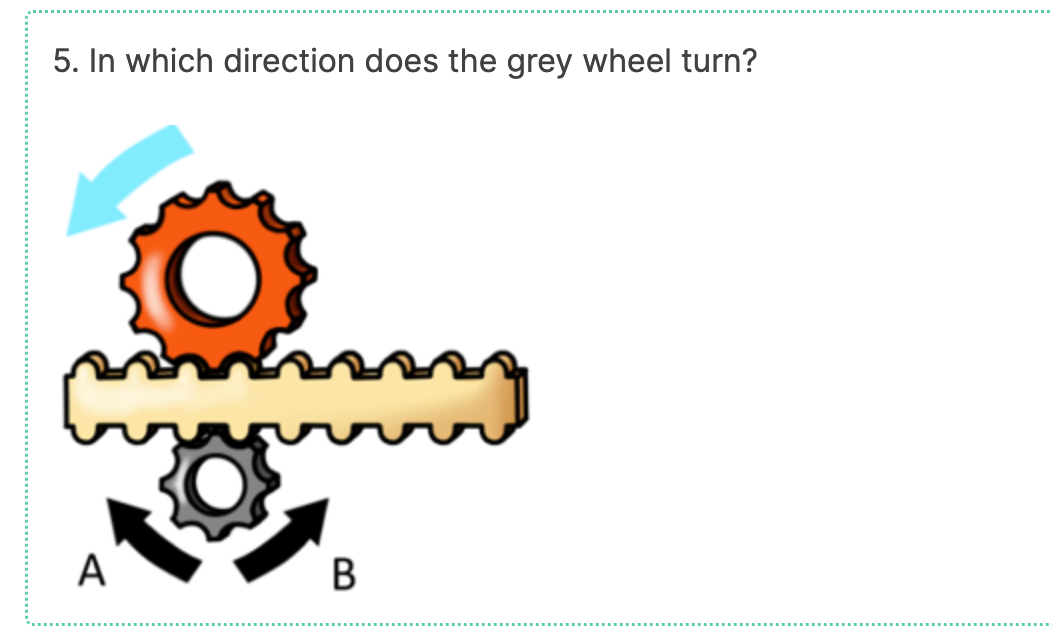
The Bennett mechanical aptitude test, established in the 1940s by George K. Bennett (as we’ve mentioned already), is one the most widely recognized mechanical aptitude tests.
Bennett designed the test to measure innate mechanical aptitude rather than learned academic knowledge, making it accessible to people with little formal technical education.
Rather than relying on vocabulary or math like other tests, the Bennett mechanical aptitude test relied on simple diagrams and pictures to measure intuitive understanding of mechanics, force, motion, spatial reasoning, and everyday physical processes.
After the war, the BMCT became a standard tool for manufacturing companies, utilities, transportation industries, maintenance and repair hiring, apprenticeship programs, unions, and more.
Industries liked it because it predicted success in roles requiring mechanical reasoning, tool use, troubleshooting, and spatial awareness, even for workers without prior experience.
BMCT-II
The BMCT-II was an update to the first version of Bennett’s mechanical aptitude test, the BMCT-I. The current version includes 55 questions with a 25-minute time limit. It’s an unsupervised test (but can be proctored), typically taken online — now offered by Pearson Talentlens, the company that eventually acquired The Psychological Corporation.
Why the test endures
The BMAT has lasted for nearly 80 years because it’s validated and widely normed, it’s fast (typically 30 minutes), and it predicts technical-job training performance well. Altogether, that makes it one of the most accessible mechanical reasoning tests ever designed.
Wiesen Test of Mechanical Aptitude (WTMA)
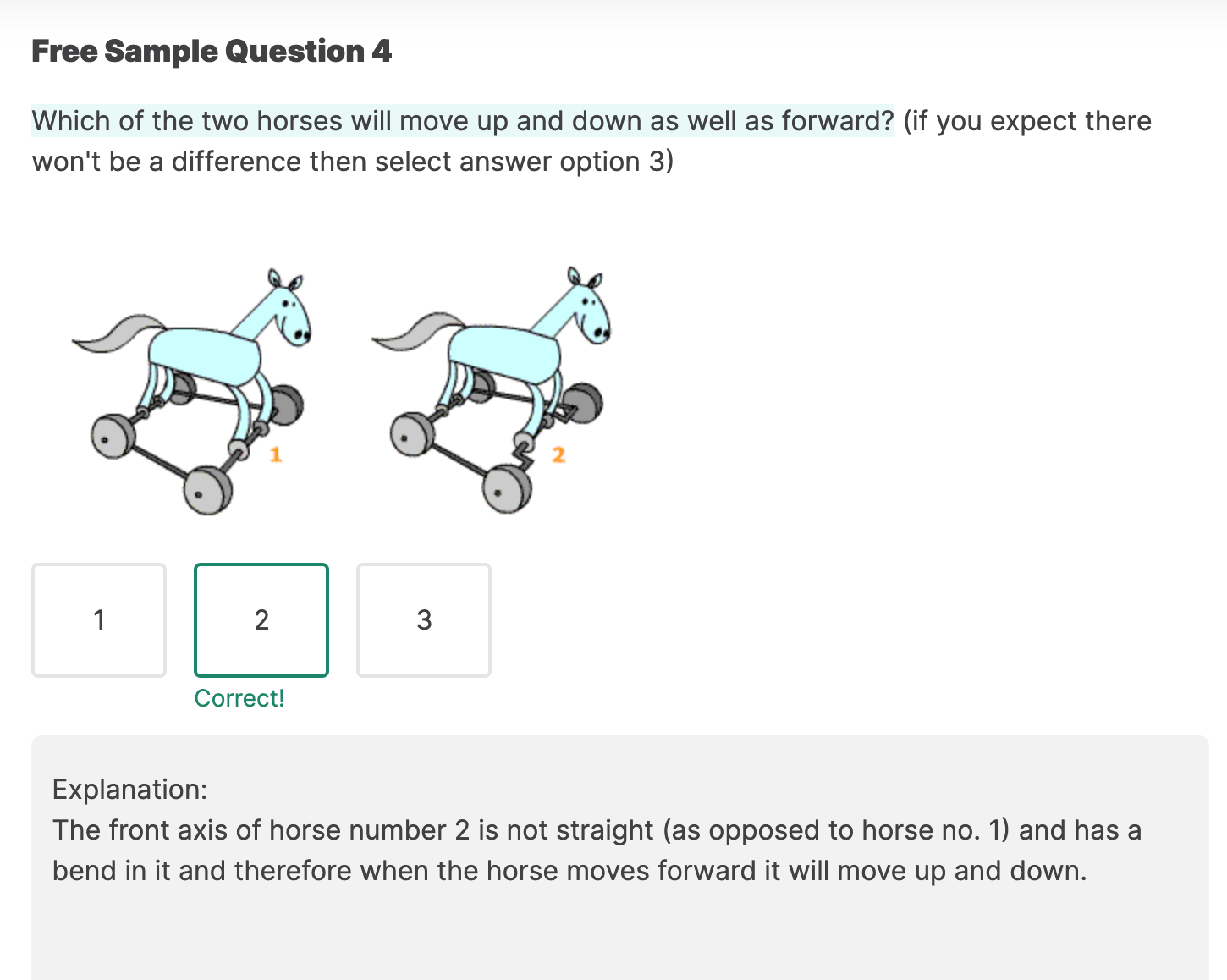
The Wiesen Test of Mechanical Aptitude (WTMA) is a more recent mechanical reasoning assessment, developed in the 1990s by psychologist Dr. Joel P. Wiesen as a modern alternative to tests like Bennett’s.
First published in 1997, the WTMA was explicitly designed to address some limitations of earlier mechanical tests – particularly to lower the reading level of questions and reduce gender or cultural biases in test content.
What’s the test format for the WTMA?
The Wiesen test contains 60 multiple-choice questions to be completed in 30 minutes. Each question features a simple black-and-white illustration of an everyday object or scenario, accompanied by a basic question with 3 answer options (A, B, or C). The content is aimed at about a 6th-grade reading level, meaning the wording is very straightforward.
Questions probe practical understanding of mechanical and physical principles: for example, gravity and center-of-gravity (which object is heavier or which will fall faster), properties of materials (which container keeps water cold longer), basic electricity, heat transfer, simple machine operation, and more.
The illustrations often depict common tools or situations (like jugs of water, ramps, seesaws, pulleys) to test the examinee’s logical reasoning about cause and effect in the physical world. This format makes the WTMA approachable for candidates with little to no technical education while still revealing their innate mechanical logic.
What skills does the WTMA measure?
The WTMA assesses mechanical reasoning and learning aptitude for using and maintaining equipment. It is intended to reflect a person’s potential to learn how machines work and to troubleshoot issues, rather than their academic knowledge.
An important aspect of the WTMA is its emphasis on fairness: studies have shown it produces much smaller score differences between male and female test-takers compared to earlier tests. This suggests it successfully minimizes bias, making it attractive to employers concerned with diversity and equal opportunity in hiring.
Because of its efforts to be more inclusive, some organizations favor the WTMA when trying to broaden their hiring pool without sacrificing predictive power. It has demonstrated high reliability (internal consistency ~0.97) and correlates strongly with performance and with other tests like the BMCT, solidifying its reputation as a valid predictor of success in mechanical roles without undue adverse impact.
Talk to sales to learn more about how the eSkill platform can help you hire.

Ramsay Mechanical Aptitude Test
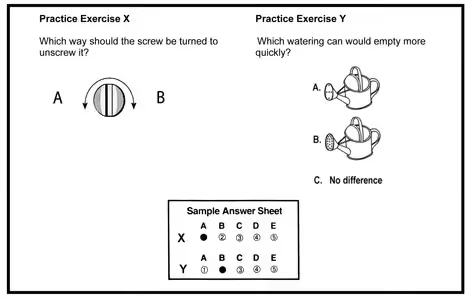
Ramsay Corporation was founded in 1955 by industrial psychologist Dr. Curtis W. Ramsay (later joined by Dr. John E. Ramsay). The company specialized in creating job-related, statistically validated assessments for skilled trades, manufacturing, maintenance, and industrial jobs.
Ramsay’s earliest tests were designed for maintenance technician roles, assembly and production jobs, apprenticeships, and industrial hiring pipelines. These exams quickly became widely used because they were highly job-specific, unlike more general aptitude tests.
The Ramsay Mechanical Aptitude Test (MAT) is a well-established assessment created by Ramsay Corporation, first released in 2004.
It was designed to be a shorter, entry-level measure of mechanical aptitude, intended specifically for industrial and maintenance hiring. Ramsay’s goal was to provide a quick evaluation of a candidate’s capacity to learn mechanical tasks, while minimizing influences of formal education or cultural background.
The latest Ramsay MAT (often referred to as MAT-4) contains 36 multiple-choice questions to be answered in 20 minutes. Like the Bennett, it is typically administered via a proctored online platform or on paper.
What skills does the Ramsay MAT measure?
The Ramsay MAT evaluates general mechanical reasoning ability and the capacity to learn and perform mechanical or maintenance tasks. It covers basic mechanical concepts (fundamentals of tools, simple machines, basic physical science) and situational judgment relevant to industrial settings.
Because it is meant to predict a candidate’s ability to be trained, the MAT’s questions are less about technical detail and more about understanding core principles and common-sense mechanics.
This also helps reduce adverse impact; the Ramsay test was developed with attention to fairness across different backgrounds and genders (similar to the Wiesen test).
Who is the Ramsay MAT test for?
Companies use the MAT for screening apprentice-level candidates in jobs like industrial maintenance technician, machine operator, equipment installer, assembly line worker, and other mechanical trade positions.
It is particularly popular in the manufacturing and industrial sectors, including food processing, consumer goods production, automotive plants, and other environments where mechanical aptitude is essential for on-the-job training.
Notably, organizations such as utilities and large production companies (like Coca-Cola and Proterra) have used the Ramsay MAT to identify candidates who can successfully learn technical tasks on the factory floor. Its short format and focus on practical mechanics make it a convenient pre-employment filter for large volumes of applicants.
Besides the Ramsay Mechanical Aptitude Test (MAT), which covers basic physics, tools, and production environment reasoning, the Ramsay Corporation also offers the Ramsay MecTest, which is more advanced and typically used to evaluate more experienced mechanical technicians. There’s also the Ramsay MultiCraft Test, which is even more advanced, covering both mechanical and electrical systems for multi-skilled technicians.
Ramsay’s tests gained dominance because they were more job-aligned than Bennett’s general aptitude format. Their validation studies closely tied scores to on-the-job performance, and employers liked their scalability for mass hiring of tradespeople.
CAST (Construction and Skilled Trades Test)
EEI is the major trade association for US investor-owned electric companies, and they develop several standardized employment tests used across the energy and utilities sector — including CAST, POSS, MASS, TECH, and SO/PD. The Construction and Skilled Trades Selection System (CAST), in particular, is a standardized aptitude assessment used by energy companies, public utilities, and industrial employers to evaluate whether a candidate has the foundational abilities needed for skilled trades and craft positions.
It’s not a test of prior job knowledge. Instead, it measures the underlying cognitive and problem-solving abilities shown to predict performance in technical and craft roles.
CAST is commonly used when hiring for roles like plant operators, lineworkers, instrumentation & controls technicians, electrician, power plant mechanics, and more.
What does CAST measure?
The CAST test includes four main test batteries, each targeting an aptitude needed for success in skilled trades: Mechanical Concepts, Reading for Comprehension, Mathematical Usage, and Graphic Arithmetic.
Together, these sections assess a candidate’s ability to understand mechanical systems, interpret technical information, perform essential math, and work with diagrams or schematics — skills that directly map to real tasks in roles like plant operations, linework, electrical maintenance, instrumentation, and power-generation support. Because these abilities are strongly linked to job performance, the test helps employers make more accurate and fair hiring decisions.
Why do employers use CAST?
CAST is designed to predict job performance in industrial and skilled-trade environments. Utilities especially like it because it helps them hire people who can learn complex systems and adapt to technical demands.
Because it’s distributed by the EEI, it’s widely adopted and considered industry-standard for US energy/utilities — similar to how Bennett is standard across general industries and Ramsay dominates manufacturing/maintenance hiring.
eSkill mechanical aptitude testing
eSkill’s mechanical aptitude tests cover basic to advanced concepts across the board for manufacturing, electricians, maintenance, and more.
Employers have the option to choose which questions they want to keep, and which to discard based on what role and level they’re hiring for — or even to sort candidates into tiers and pay ranges based on knowledge and skill.
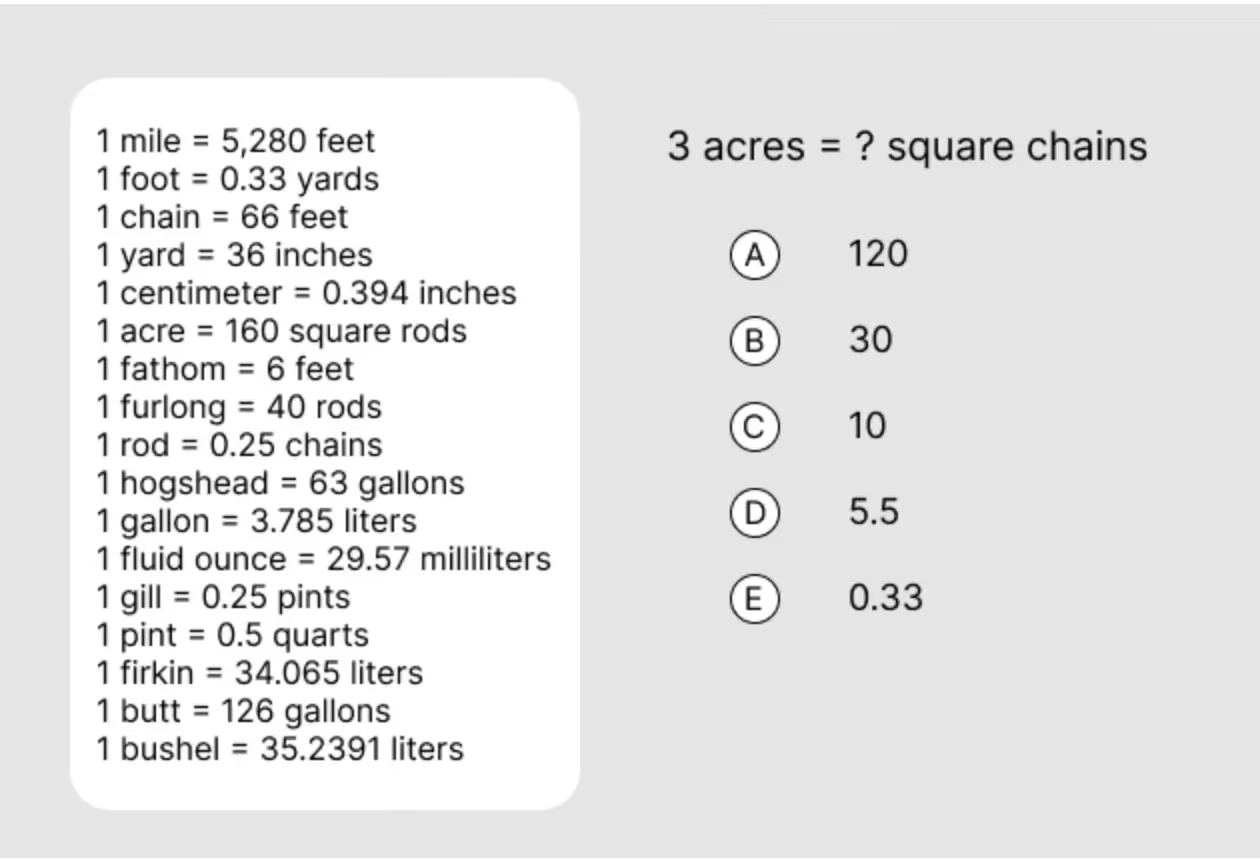
Additionally, manufacturing companies have used our test questions on reading tape measures, basic math, questions about tools or fasteners, converting units, industrial math, and digital literacy to hire for mechanical roles that fit their needs (and are relevant to the increasing digitization of manufacturing).
eSkill also offers digitization to rapidly create online versions of existing paper tests. Orgs can then update those tests by accenting them with high-value, specific questions from the eSkill library.
What do eSkill tests measure?
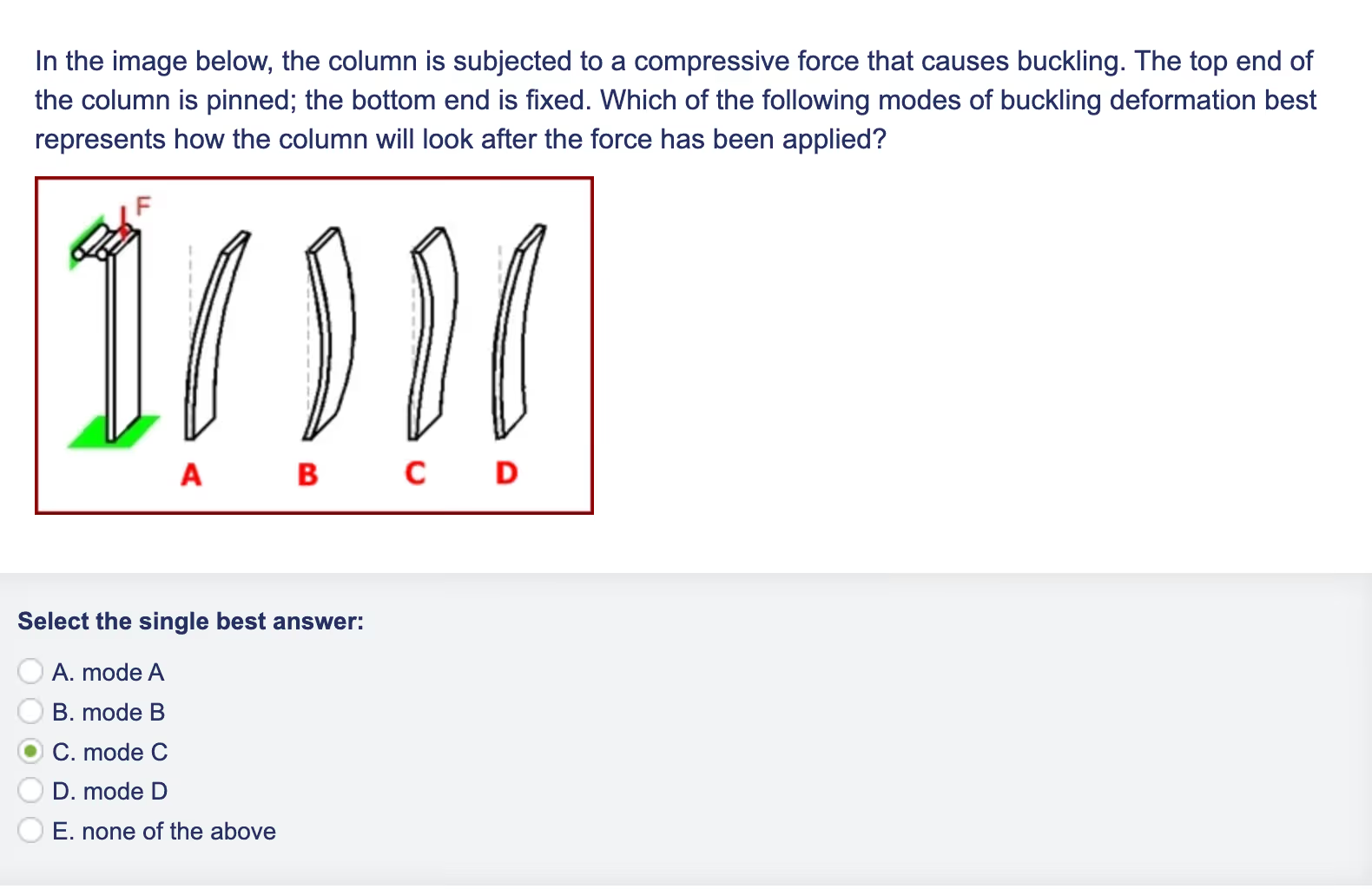
eSkill’s mechanical aptitude assessments measure a broad spectrum of mechanical reasoning skills, spanning basic tool familiarity to advanced applied concepts used in manufacturing, maintenance, electrical work, utilities, HVAC, and other technical fields.
Because every organization’s workflow and technical environment differs, eSkill’s platform allows each test to be tailored to the exact role and level — so employers evaluate only the knowledge and competencies that matter most.
Manufacturing companies frequently draw from eSkill’s library to test practical, real-world skills such as reading tape measures, interpreting diagrams, identifying tools and fasteners, performing basic and industrial math, converting units, and applying mechanical reasoning to everyday equipment tasks.
As factories and skilled-trade environments become more digitized, employers also rely on eSkill’s digital literacy items to ensure candidates can navigate modern interfaces, sensors, and software-supported machinery. The goal is to reflect the actual demands of today’s mechanical roles, not outdated academic exercises.
Many employers choose to pair mechanical aptitude tests with eSkill’s behavioral or situational assessments. This combination provides a more complete view of each candidate, capturing not only their mechanical potential but also qualities such as reliability, teamwork, safety orientation, and readiness for advancement. Together, these insights help organizations select applicants who are both technically capable and well-suited to the environment they’ll be joining.
Why do employers use eSkill?
eSkill's question types go beyond common multiple choice — you can use diagrams, multiple choice, true false, even simulations, and open response via video or audio.
eSkill tests integrate into applicant tracking systems, providing modern organizations an easy way to assess candidates in their pipelines.
You can also pair eSkill mechanical aptitude assessments with eSkill behavioral tests to get an understanding of a candidate's cultural fit and potential for growth and advancement.
Why mechanical aptitude tests have stood the test of time
How have these tests stood the ultimate test — of time, that is?
Mechanical aptitude tests began as wartime tools but evolved into a standard part of hiring across industries that rely on physical systems and technical reasoning.
Whether employers use long-standing assessments like Bennett and Ramsay, industry-specific batteries like CAST, or customizable modern platforms, the goal remains the same: find candidates who can learn mechanical tasks quickly, work safely, and excel in skilled-trade or technical environments.
If you’re considering implementing or modernizing your approach to mechanical aptitude testing, eSkill can help you build an assessment that fits your exact role requirements — whether you’re hiring an electrician, a welder, or any other mechanics-adjacent role.